Wedding Welcome Sign Wording: What to Write
The welcome sign is the first thing most guests read, usually while they are still working out where to put the car keys. Good wedding welcome sign wording tells them they are in the right place, sets the tone for the day, and can carry the one instruction that saves your ushers ten conversations. Most couples write far too much. The best signs are short.
Quick answer: four elements cover almost every wedding. A greeting, both names, the date, and one practical line. "Welcome to the wedding of Amelia and Tom, 12 June 2027, please sit anywhere" does the whole job in thirteen words. Everything else belongs on a smaller sign further into the venue.
What a welcome sign is really for
Guests read a welcome sign while walking, usually from a couple of metres away, often with a hat in one hand and a card in the other. Three seconds, then they move on. Write for those three seconds and the sign does its work.
It is also the first design decision anybody sees, so it quietly sets expectations for the stationery, the table names and the order of service. A soft hand lettered sign promises a relaxed day. Centred serif capitals promise a formal one. Guests pick that up before they have read a word.
The four lines that do the work
Greeting first, then names, then date, then the instruction. Keep the names on a line of their own and let them be the largest thing on the board, because that is what people photograph. Spell the date out rather than using numerals. "12 June 2027" looks like a keepsake. "12/06/27" looks like a delivery note.
Wedding welcome sign wording, from formal to very short
Pick a register and stay inside it. The commonest mistake I see is a formal greeting with a joke tacked on at the foot of the board, and it makes an expensive sign look accidental rather than relaxed.
Formal and traditional
Full names work here, middle names included if the rest of your stationery uses them. "The marriage of Miss Amelia Rose Hartley and Mr Thomas Grant" suits a church, a chapel or a listed hall. If your invitations spell the date out, carry that through: "Saturday the twelfth of June, two thousand and twenty seven".
Warm and modern
First names only, with a greeting that sounds like something you would say out loud. "Welcome to our wedding". "So glad you are here". "Today we say I do". This register travels well, and it holds up in a barn, a garden, a town hall or the back room of a restaurant.
Very short
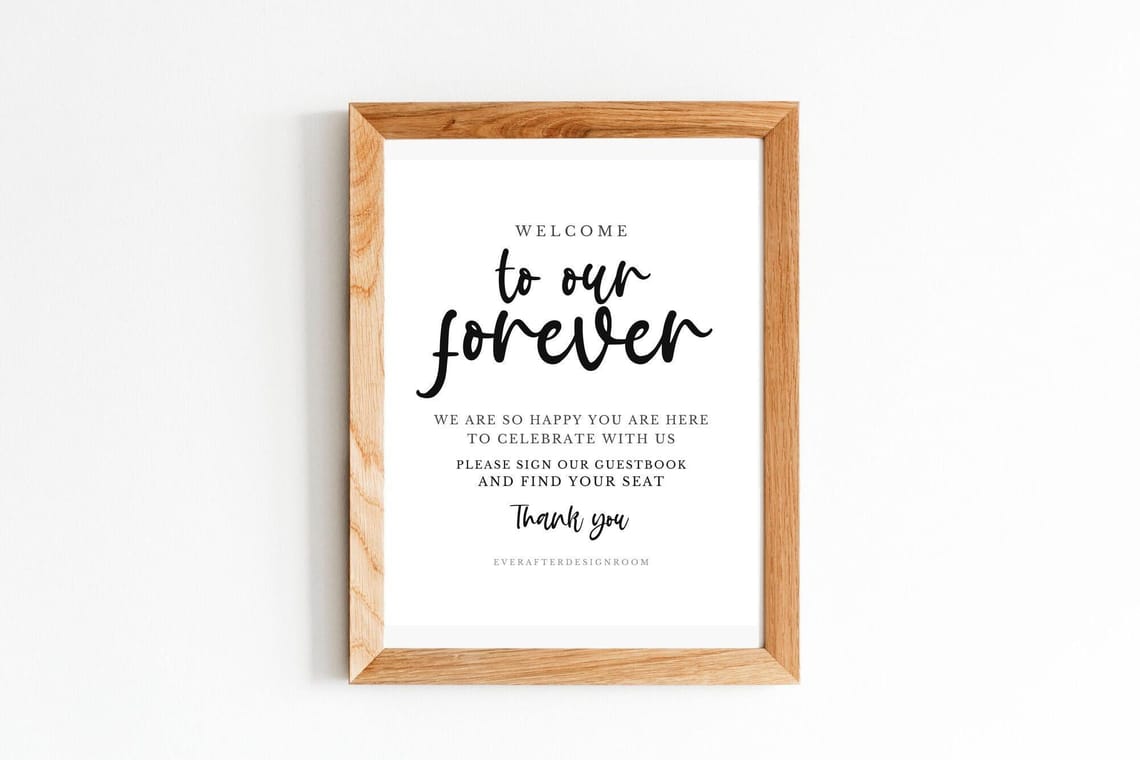
Two or three words above the names and nothing else. On a big board, empty space does more work than another sentence, and short wording is far easier to read from the car park. "Welcome to our forever" is the line I am asked for most often. It is warm without being twee. Give it the top line to itself and let the names sit underneath.
Wording you can lift straight onto a sign:
- Welcome to the wedding of Amelia and Tom
- Welcome to our forever
- Amelia and Tom, finally
- Today, two families become one
- We are so glad you are here
- Mr and Mrs Grant, from today
- Welcome to the beginning of Amelia and Tom
- Please come in, the wedding of Amelia and Tom, 12 June 2027
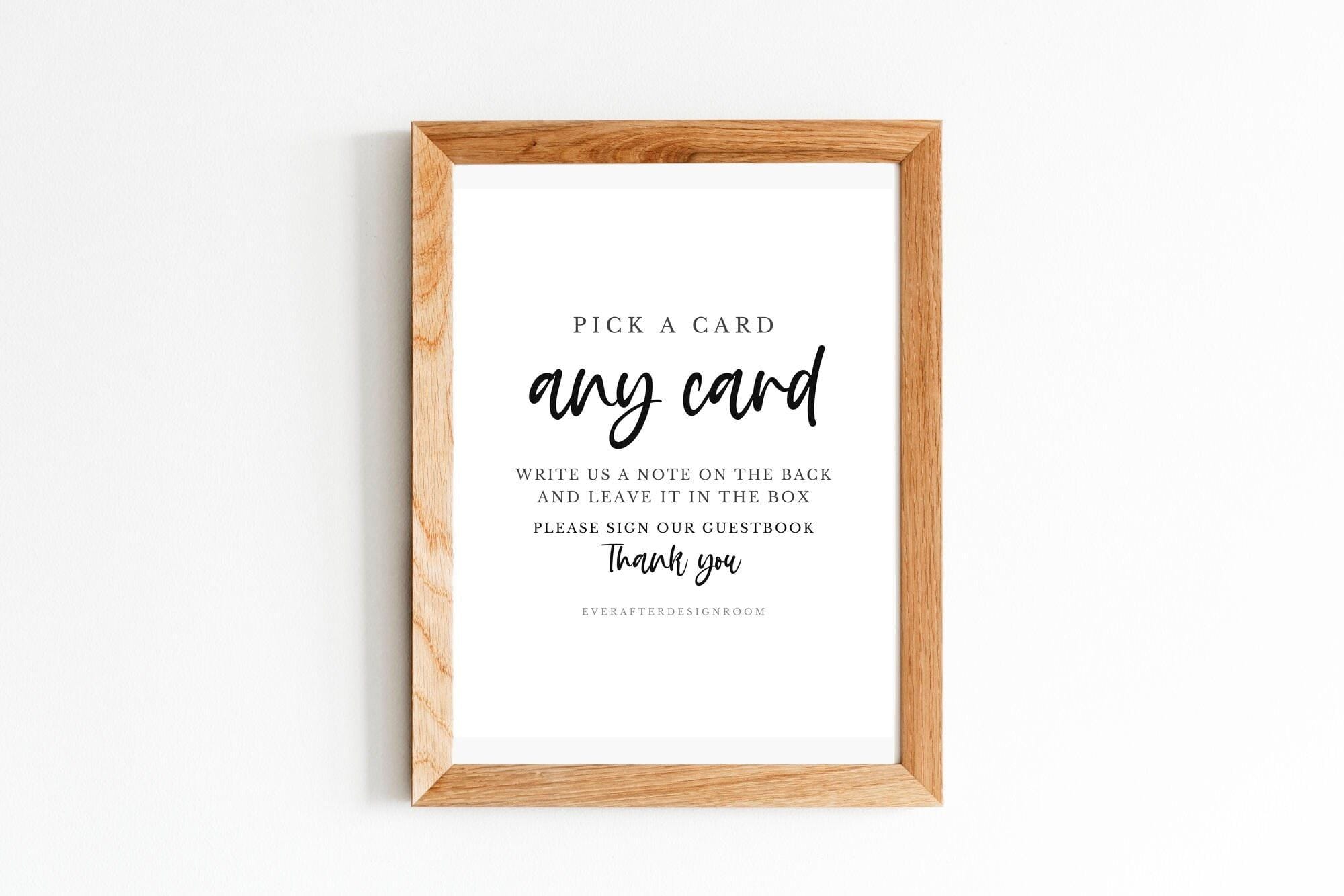
If you would rather type your names into a layout that already balances, the printable signs in EverAfterDesignRoom download straight away, so you can have the file at a print shop the same afternoon.
Adding the venue, the date and a line about phones
Venue names earn their place when guests are travelling a distance, when the building holds more than one event space, or when you want the sign in the album as a record of where the day happened. Otherwise leave it off. Nobody arrives at a barn unsure whether it is the barn.
The practical line is the part couples forget, and it is the part that actually cuts down questions on the day. Choose one only, in smaller lettering at the foot of the sign:
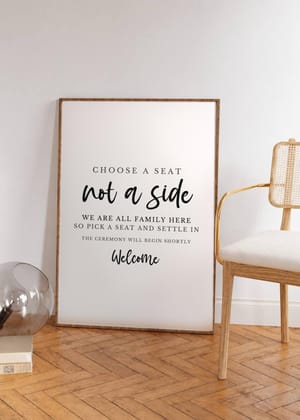
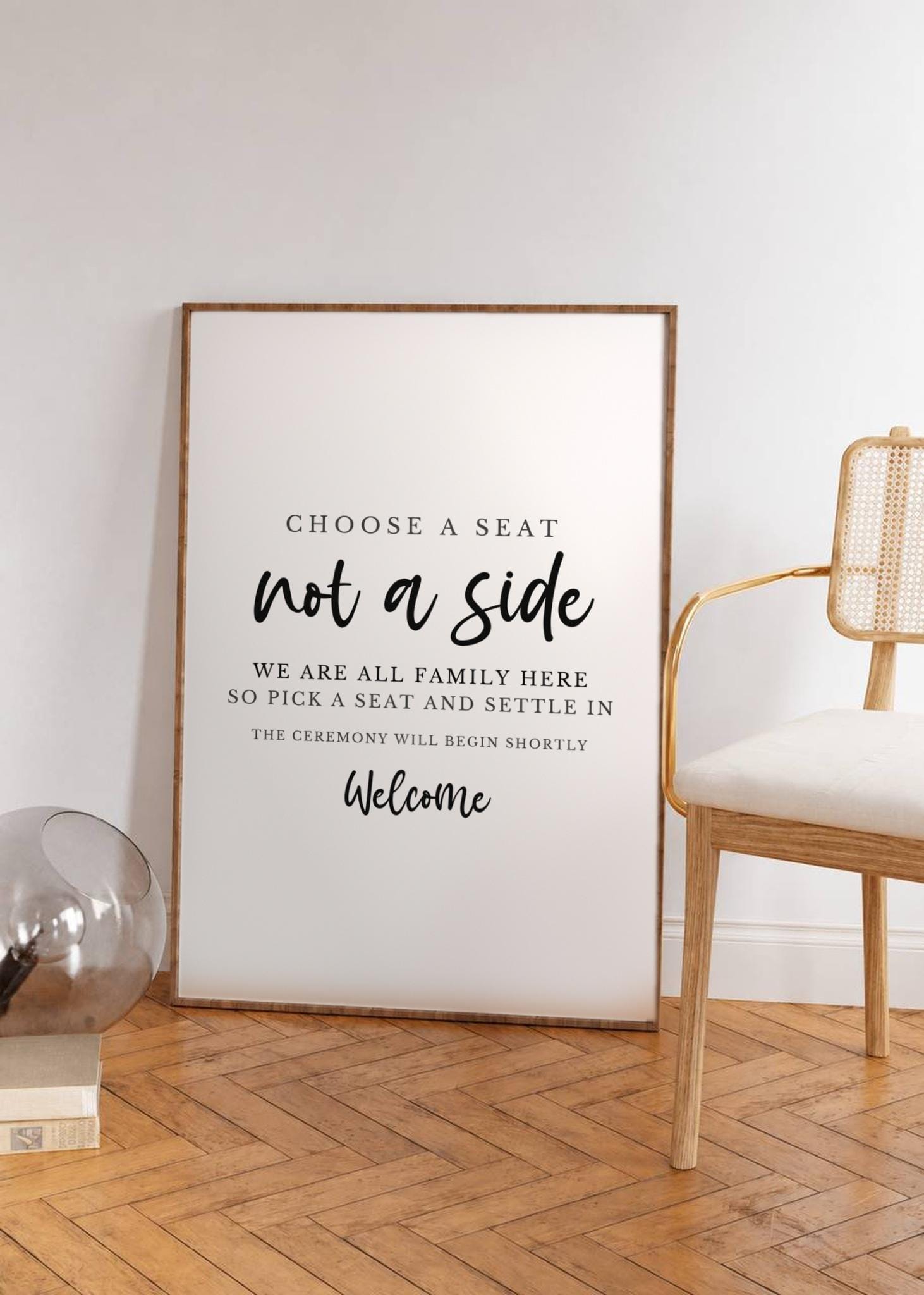
- Please pick a seat, not a side
- Ceremony at two o'clock, drinks on the lawn afterwards
- Cards and gifts on the table to your left
- Please turn phones to silent
- Unplugged ceremony, photographs afterwards
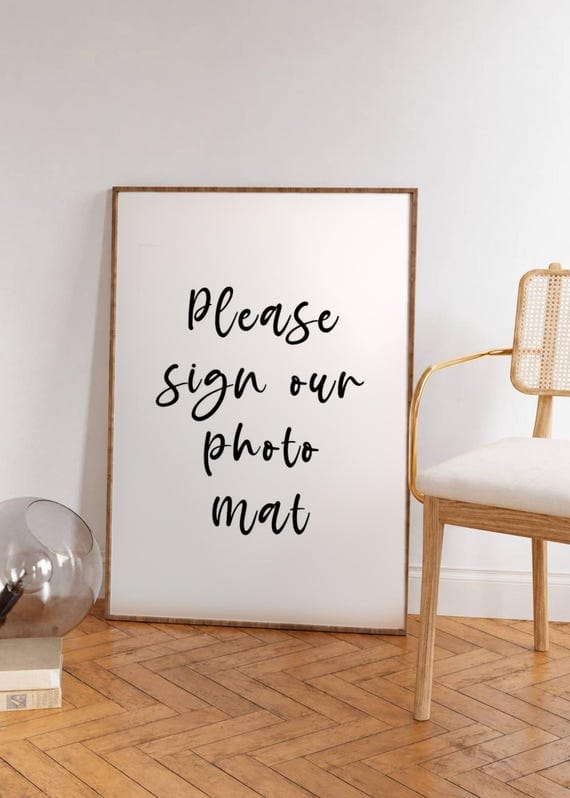
- Please sign the guestbook before you sit down
Unplugged ceremony wording
Give a reason, and be kind about it, because a flat instruction reads as a telling off. Something like "We have chosen an unplugged ceremony. Please keep phones and cameras away until we are married, then photograph everything" lands well. If the request matters a great deal to you, repeat it on a small card at the end of the aisle rather than lengthening the welcome sign.
Size, placement and printing
A2 is the smallest size that still reads as a welcome sign on an easel. A1 is the safer default for outdoor entrances, wide doorways and anywhere guests approach from more than a few metres. A3 belongs on a table top beside the guestbook, and it will vanish next to a floral arch.
Stand the sign where guests have to pass it but do not have to step around it, about a metre to the side of the entrance, with the top edge near eye height. Outdoors, weight the easel. Keep the board out of direct afternoon sun as well, which lifts colour out of inkjet prints faster than most people expect.
Printing it yourself or sending it out
Large formats are usually best left to a local print shop on foamboard or heavy card. Table top signs and smaller ceremony notices print perfectly well at home. My guide to printing digital art at home covers paper weight, borders and colour settings, and the same advice holds for signage.
Matching the rest of your wedding signage
Signage looks expensive when it looks like a set. Use one typeface pairing throughout, keep headings in the same case, and hold the same margin on every piece. If the welcome sign centres its text, centre everything else.
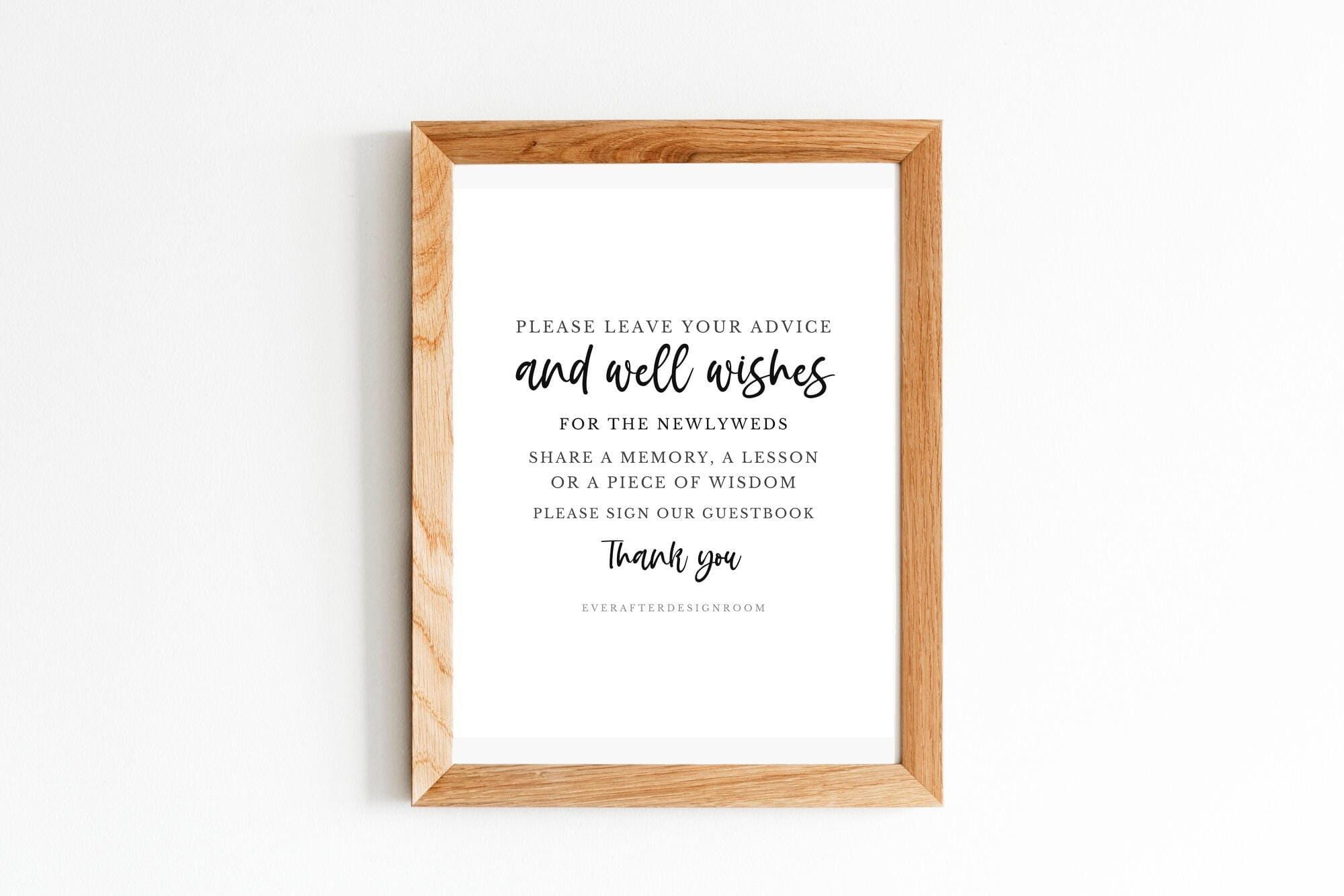
Then work outwards: order of the day, seating plan, bar list, guestbook sign, a table of keepsakes. An advice card station is the easiest thing to add, and my piece on advice sign ideas for weddings and graduations has prompts guests actually answer. Matching sets of printable wedding signs are in EverAfterDesignRoom if you would rather personalise a design than build one from scratch.
One last thing worth doing: keep the file. A welcome sign reprinted at A4 and framed makes a quiet first anniversary gift, and it sits well beside a portrait or a line drawing of the venue.
If you want wording that is already laid out and only needs your names, have a look through the wedding signs in EverAfterDesignRoom. I am happy to answer questions about sizes before you buy.
Frequently asked questions
What should a wedding welcome sign say?
A greeting, both names, the date, and one practical line. That is enough for most weddings. Add the venue only if guests are travelling or the building holds several events at once. Keep the names largest, spell the date out in full, and set the instruction in smaller lettering at the foot of the sign so it does not compete.
What size should a wedding welcome sign be?
A1 is the safe default for an entrance, and A2 is the smallest size that still reads as a welcome sign on an easel. A3 suits a table top beside the guestbook but looks lost next to florals. Anything larger needs heavier board and a weighted easel, especially outdoors.
Do you put the date on a wedding welcome sign?
Usually yes, because the date is what turns the sign into a keepsake once the day is over. Write it out in full rather than in numerals, and match the style your invitations used. If your wording is very short, the date can sit under the names in smaller lettering without crowding them.
How do you word an unplugged ceremony sign?
Give a reason and set an end point. "We have chosen an unplugged ceremony. Please keep phones and cameras away until we are married, then photograph everything" is warm and clear. Avoid words like forbidden or strictly, which read as a telling off. If it matters a great deal to you, repeat the request on a small sign near the aisle.