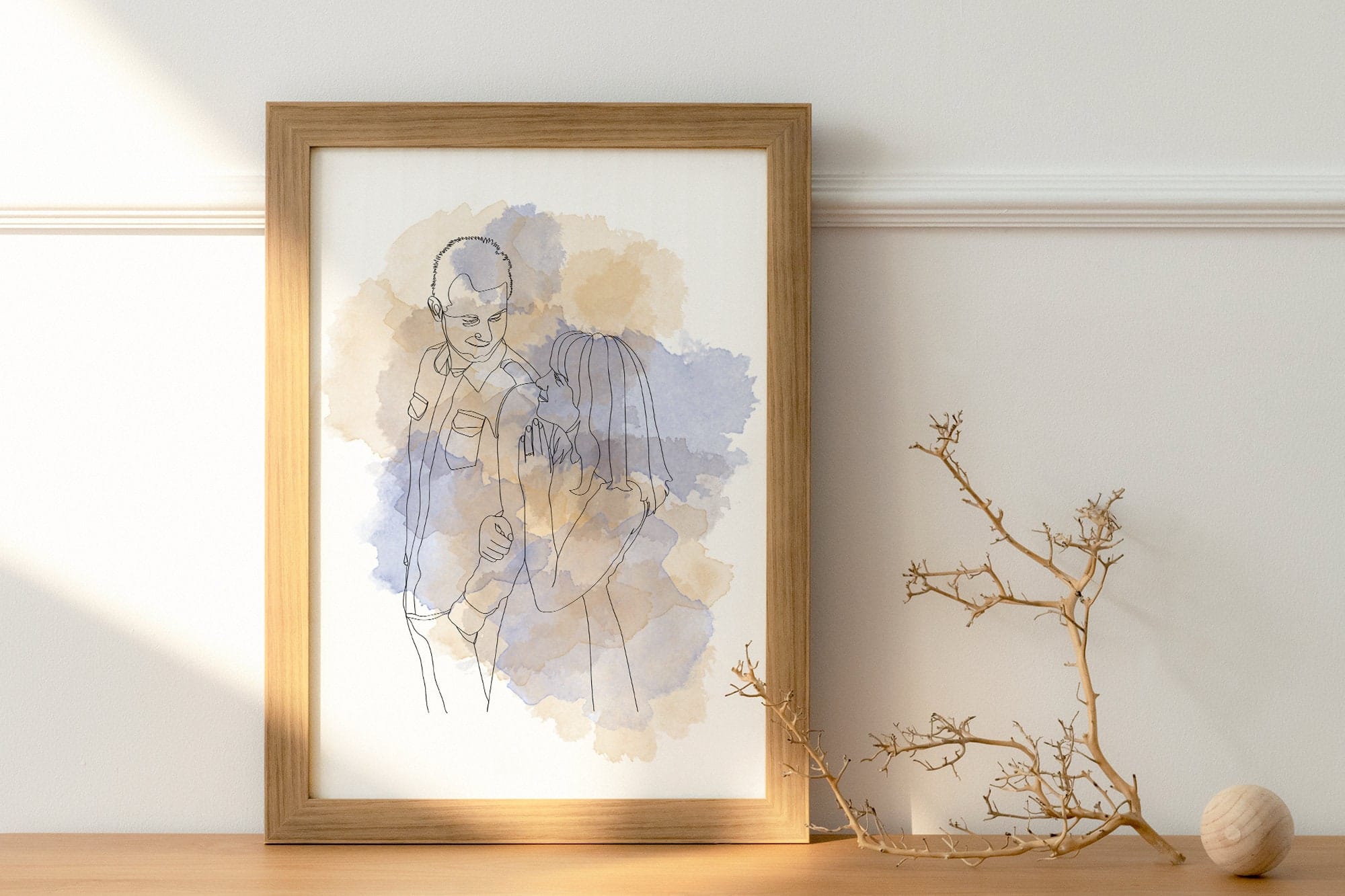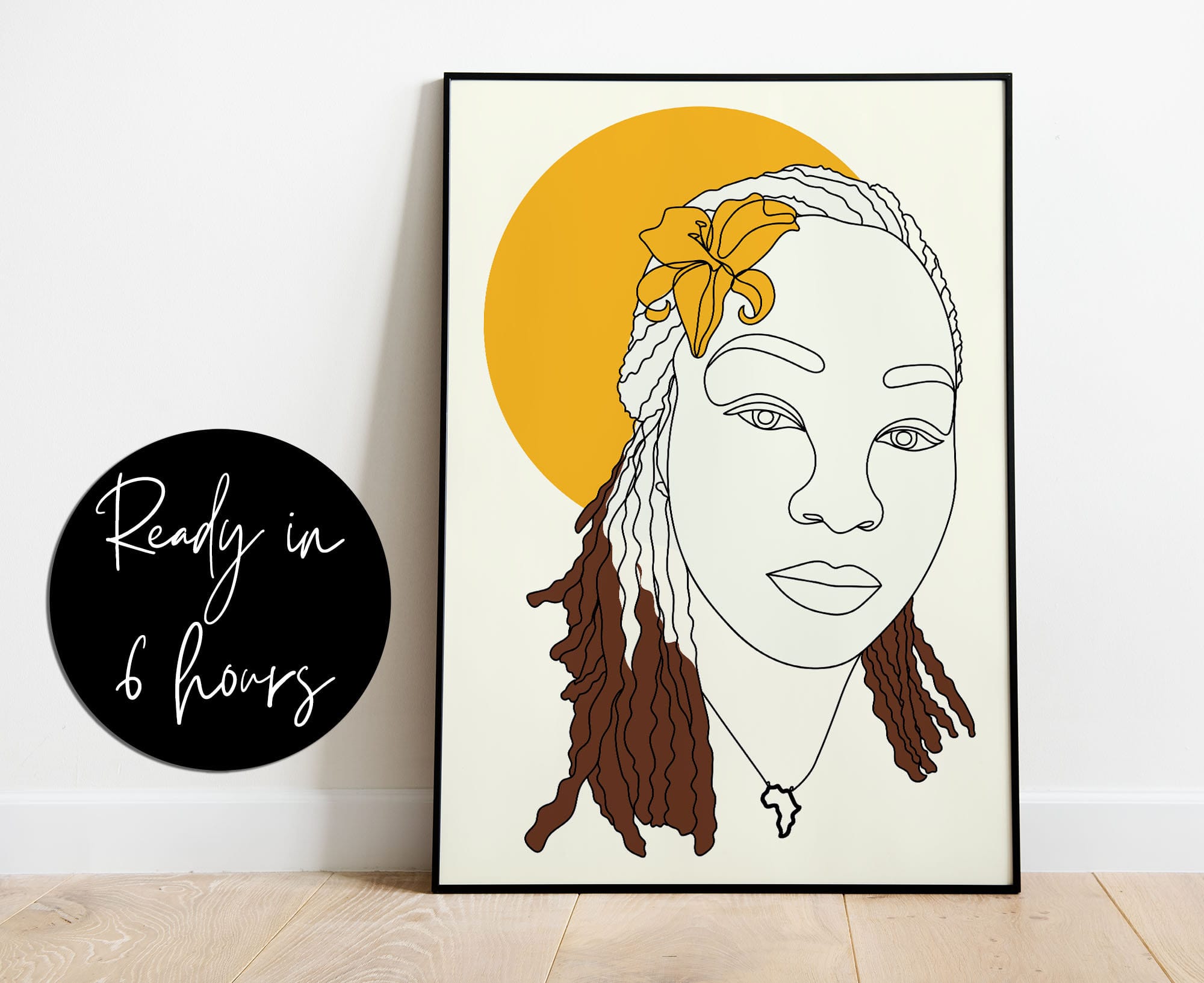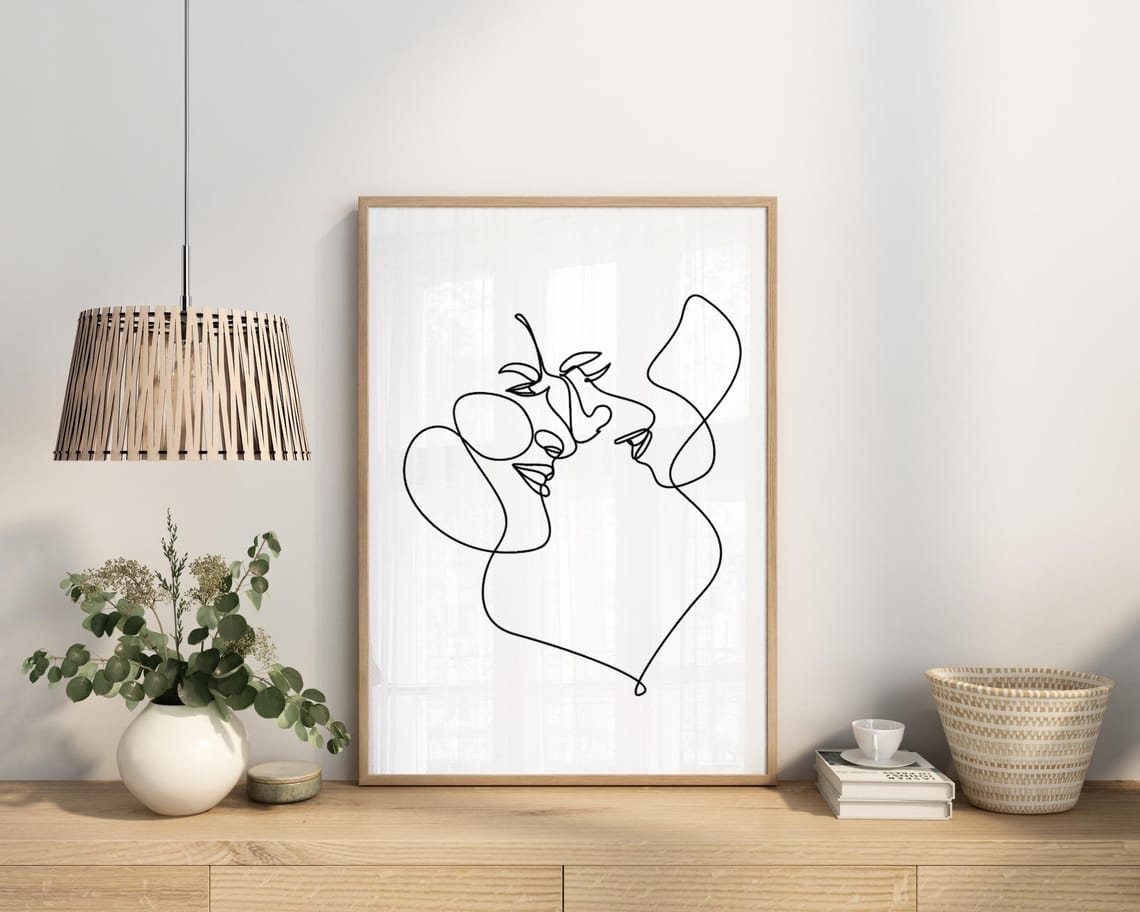
One Line Portrait Tattoo Design: Get It Right
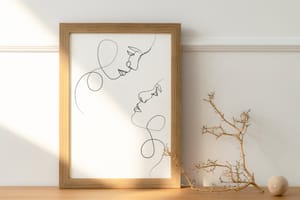
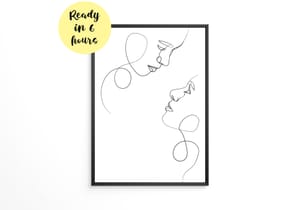
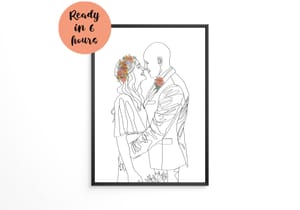
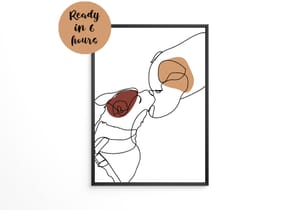
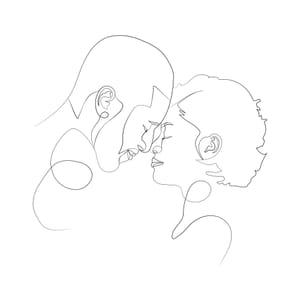
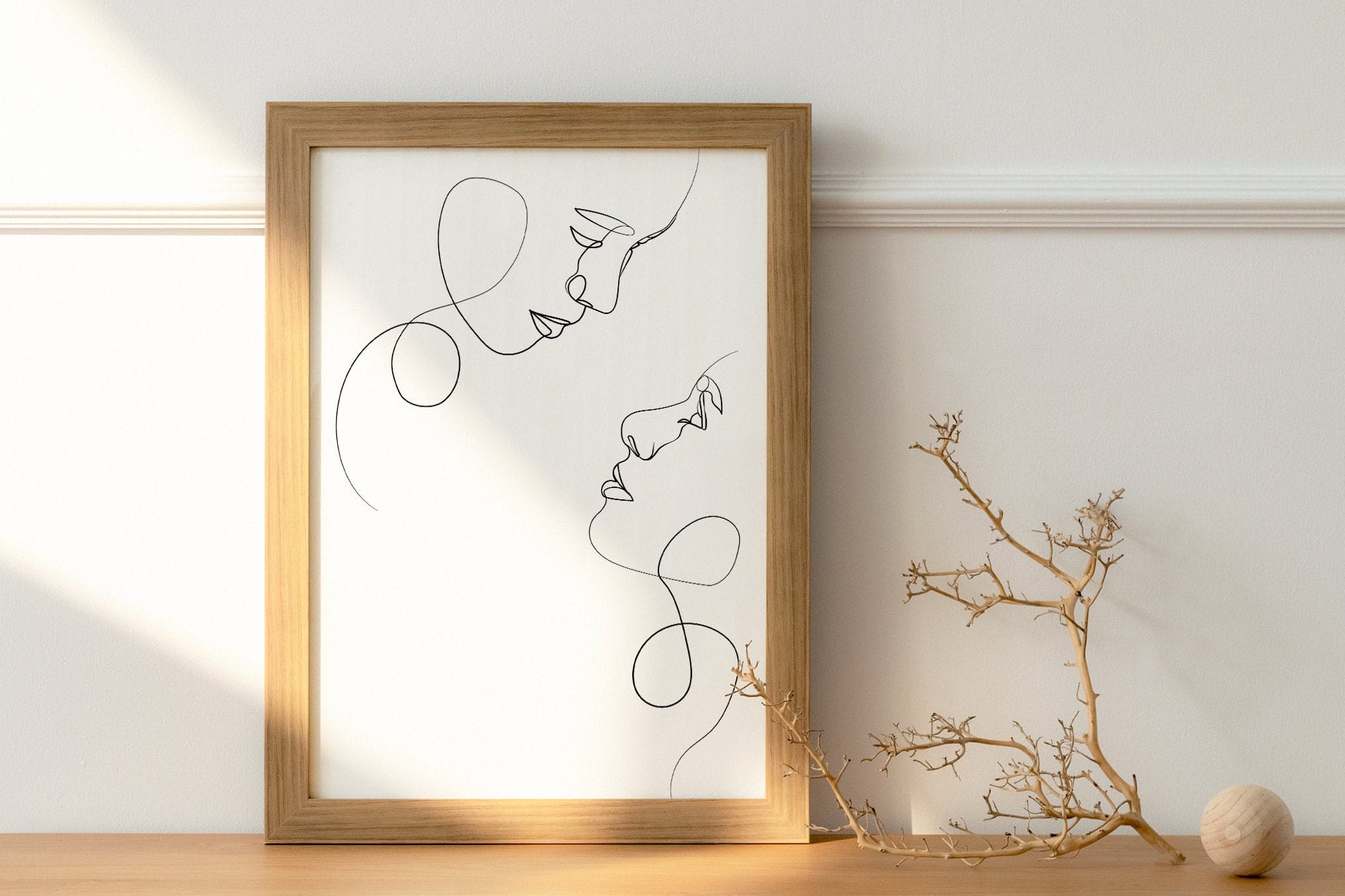
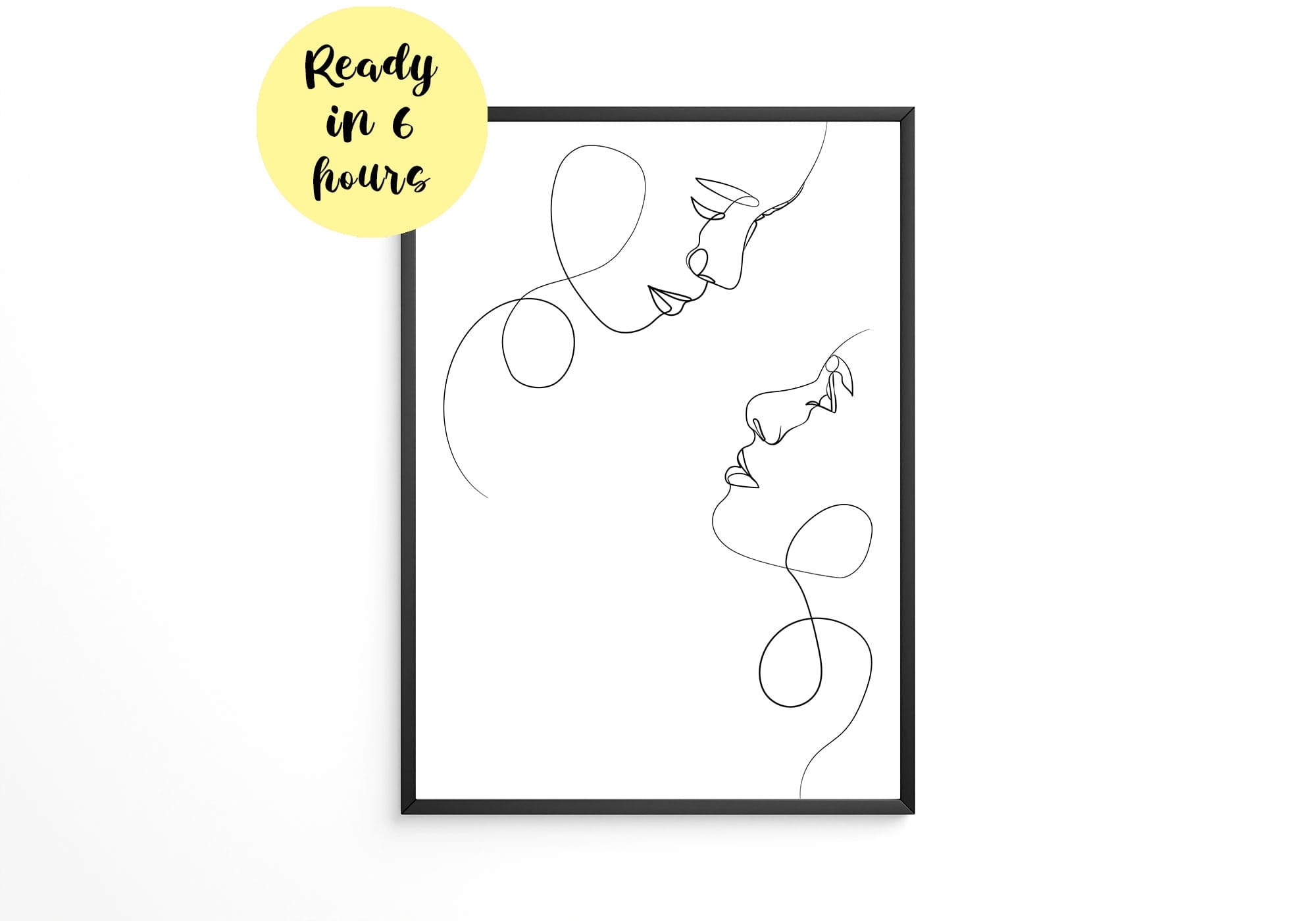
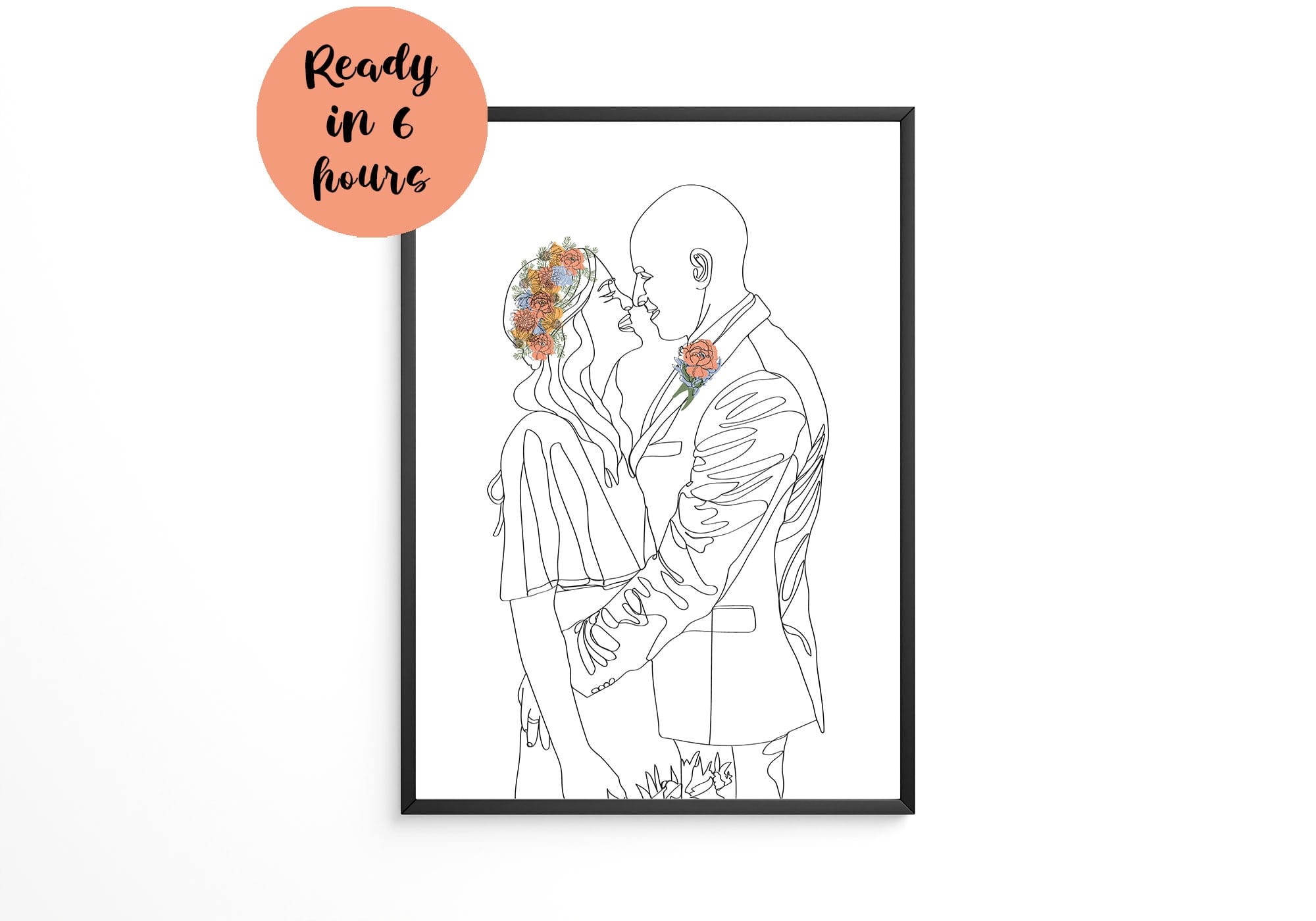
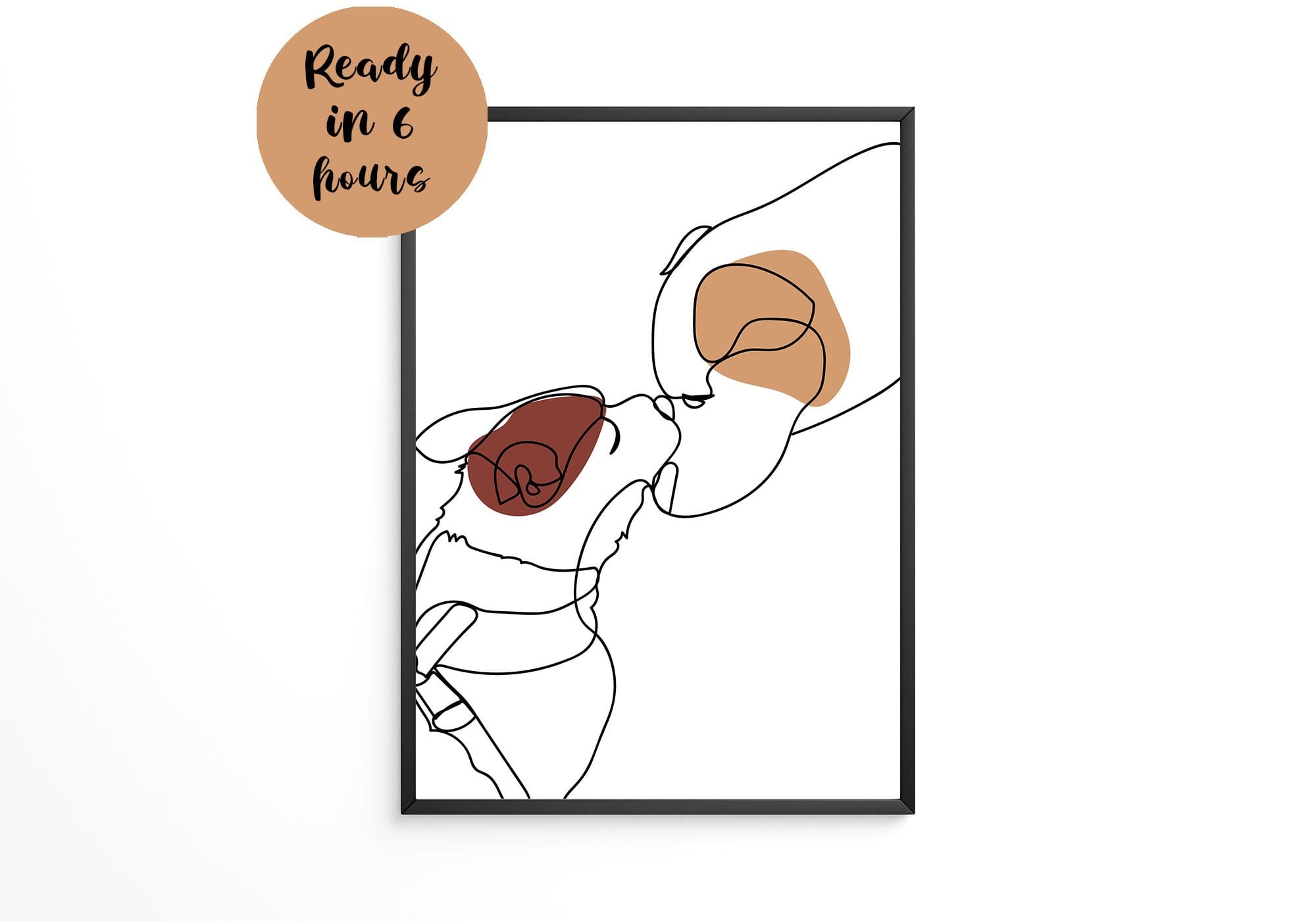
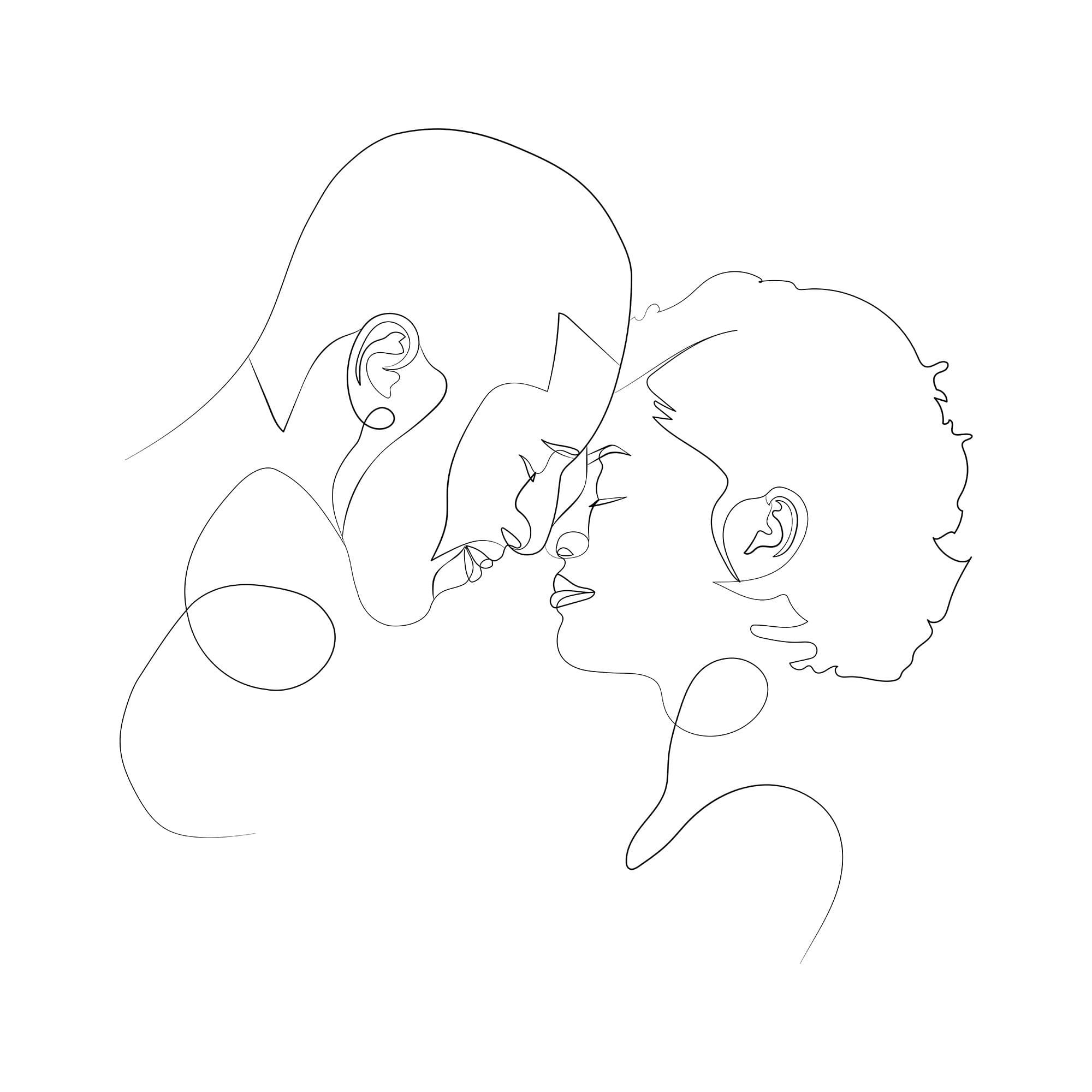
A one line portrait tattoo design is a likeness drawn in one continuous stroke, the pen never leaving the page. Done well, it holds a whole face, or a dog's ear and muzzle, in something you could trace in the air with a finger. Done badly it is a tangle that reads as nothing from two steps away.
The difference is almost never the tattooing. It is the drawing that goes under the needle, and the photograph that drawing came from.
The short version: commission the line drawing first, from a sharp, well lit photo taken at the subject's eye level. Print it at the exact size you plan to wear before you book the chair. Then send your artist a vector file, the finished dimensions in centimetres and a photo of the placement.
What a one line portrait tattoo design is actually doing
A single line has no shading to fall back on. The likeness comes from proportion and a handful of decisive turns, and the eye reads the spacing between features far more than the features themselves. Shift the gap between the eyes by a millimetre and you have drawn somebody else.
Because the stroke never stops, everything is joined: jaw into ear, ear into hair, hair back down into a collar. Those joins are decisions, not accidents. A good drawing puts them where your eye already wants to travel.
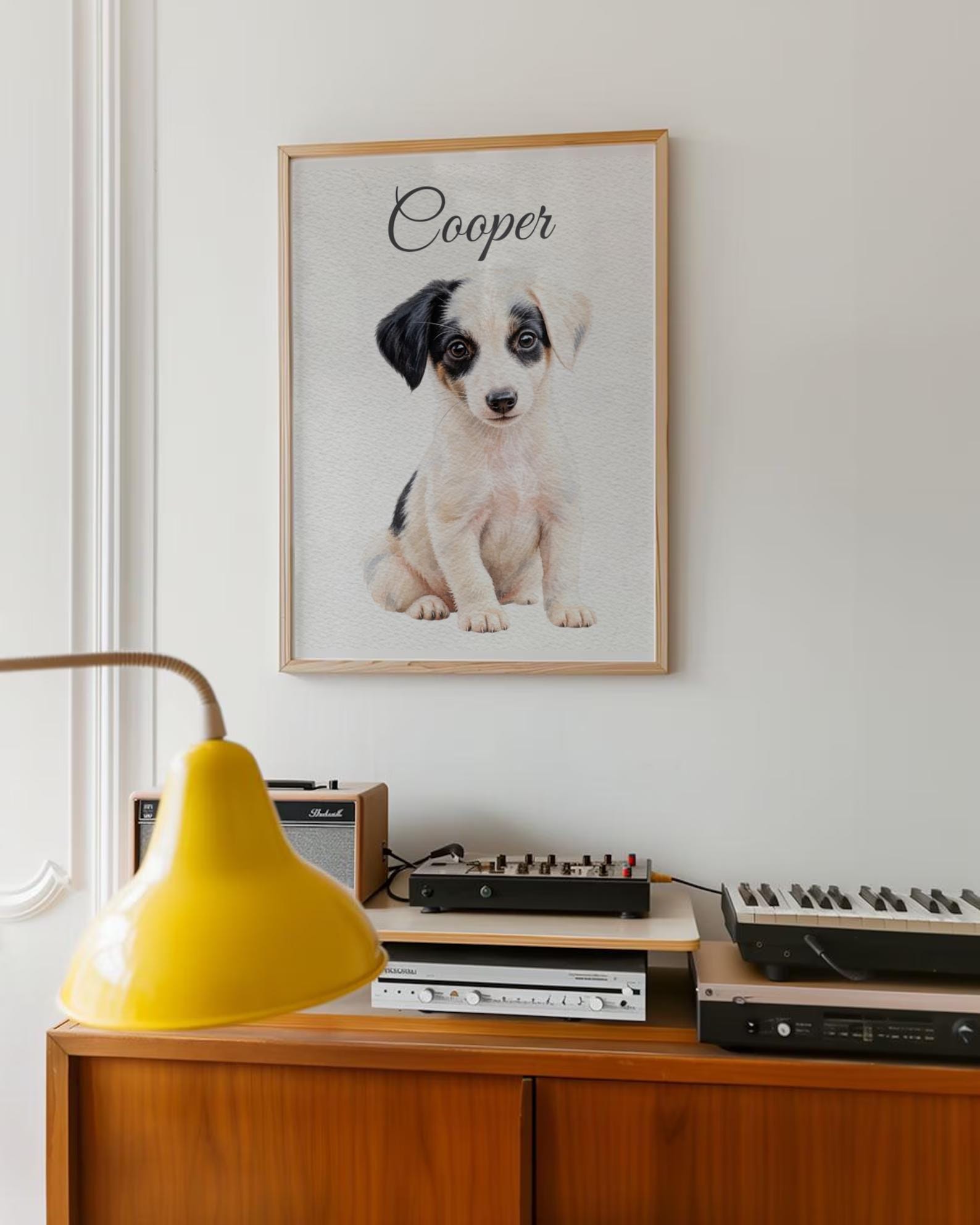
Some subjects take to it more readily than others. Pets do well, because a snout, an ear and a collar give the line strong shapes to hang on. Human faces are harder. A slight three quarter turn is usually kinder than a straight on shot, which needs near perfect symmetry to look right.
If you are still weighing up styles, our comparison of line art and watercolour portrait styles is a good place to start, though only the line version will translate to skin.
Start with the photograph, not the tattoo
A minimalist tattoo design from a photo can only be as good as the photo. An artist working from a dark, low angle phone snap is guessing at the jaw, and guesses show once the whole face comes down to twelve or fifteen strokes.
What a good reference photo gives the artist
Daylight from the front or slightly to one side. The camera at the subject's eye level, which for a dog or a cat means getting down on the floor. Focus on the eyes, and enough room around the head that nothing is cropped away. Our guide to choosing the best photo for a custom pet portrait goes into more detail, and it applies just as well to people.
Photos that fight a single line
Heavy backlight flattens a face into a silhouette. Strong filters invent edges that were never there. Dark fur against a dark sofa leaves the line nothing to follow, and motion blur softens the exact contours the drawing needs.
Send two or three options rather than one. It costs you nothing, and it lets me pick the angle that will still hold together once everything else is stripped away.
Why the drawing should be commissioned before the appointment
A studio is the wrong place to design anything. The artist is working to a booking slot, you are running on adrenaline, and a decision made in ten minutes gets worn for decades.
A commissioned drawing arrives as a file you can sit with. Sleep on it, ask me to lift the ear, print it, show it to someone who knew the person or the pet. If you would like one drawn before you book, pet line art at OpenHeartLines starts at $20 and most files go out within a day or two, which is well under the deposit on a typical appointment.
Most tattoo artists welcome this. They would rather spend chair time on the stencil, the placement and the line itself than redraw a face from scratch. Ask whether they want to adjust the design for skin, and expect a yes to at least some of it.
Checking line weight at real size
Print it at the size you will wear it
On a screen every line looks crisp. Print the design at its exact finished width, cut it out, hold it against the skin and look in a mirror from arm's length. If the features close up into a blob, it is either too small or carrying too much detail.
Leave more space than looks necessary
Ink spreads a little as it settles and ages, so lines that sit comfortably apart on paper can creep towards each other over the years. Ask your artist how much clearance they want between adjacent lines at your chosen size, then pass that back to whoever is drawing it as a fixed constraint.
When something has to be smaller, simplify instead of shrinking. Take three strokes out and the design stays readable. Scale the same twenty strokes down and you just have twenty crowded ones.
Fitting the design to the body part
An inner forearm is long, narrow and curved. A portrait composed as a square will either float in the middle of it or get squeezed at the edges, and neither looks considered.
Name the placement before the drawing starts: inner forearm, outer bicep, ribs, ankle, behind the ear. Then ask for the composition in the right proportion, taller than it is wide for a piece running with a limb, wider for a collarbone or a shoulder blade.
Curved areas foreshorten. Ribs and the outside of an arm bend away from whoever is looking, so anything dense gets harder to read from the side. Simple shapes survive that; busy ones stop working.
Memorial tattoo design and small tattoos for a loved one
A lot of single line portraits are memorial pieces, and often the only photograph that exists is old, printed and slightly soft. Say so at the start. I can work with a poor reference if I know it is the only one, because then I ask questions about the shape of a face instead of quietly inventing it.
A small tattoo for a loved one does not have to be a whole face either. A pair of hands, a set of glasses, a dog's profile and collar tag, or a signature lifted from a letter will often be more legible and more private than a portrait. If you are using handwriting, send a flat scan taken from directly above rather than an angled photo.
What to send your tattoo artist
Once the design is settled, send everything in one message so nothing has to be reconstructed from memory on the day:
- The final drawing as a vector file (SVG, PDF or EPS) wherever possible, plus a high resolution PNG on a transparent background
- The exact finished size in centimetres, both width and height
- The placement, named plainly, and whether the piece runs with the limb or across it
- A daylight photo of the area of skin, so scars, moles, hair and existing tattoos are visible
- The original reference photo, so the artist can check the likeness themselves
- A note on which lines matter most, in case something has to be simplified at the stencil stage
- Any date you are working towards
Send all of that and there is nothing left for anyone to guess at in the chair. If you would rather have the drawing resolved first, I draw pet and people portraits at OpenHeartLines and can set the file up at the exact size you have chosen.
Frequently asked questions
Can any tattoo artist do a one line portrait?
Most can tattoo a clean single line, but it is a specific skill. Long unbroken strokes need steady pressure and leave no room to correct halfway. Look through an artist's healed work rather than fresh photos, and ask to see fine line pieces at a similar size. A good artist will tell you honestly if it is not their strength.
How small can a one line portrait tattoo be?
It depends on how many times the line crosses itself. A simple pet profile can sit happily on a wrist or behind an ear. A human face with hair usually needs more room, often a forearm or an upper arm. Print your design at the size you want and judge it from arm's length before you commit to anything.
Do I need a vector file for a single line portrait?
Not always, but it helps a great deal. A vector scales to any size without softening, so your artist can adjust the dimensions on the day without losing edge quality. If you only have a raster image, ask for it at 300 dpi at the finished size or larger, on a transparent background rather than white.
Can you make a one line portrait from an old or blurry photo?
Often yes, though it changes the process. Tell the artist it is the only photograph you have, and share anything else that helps, such as a second picture from another angle or a description of the face. Expect a few more rounds of revision, and expect a considered interpretation rather than a copy.